Showing posts with label Worksheets Don't Grow Dendrites. Show all posts

Fun and Games for Learning in the Second Grade Classroom

We all know that research supports the use of educational games to enhance learning. The FUN FACTOR that games provide can't be beat! Maybe you have been thinking about making your learning activities more game-based, but are wondering where to start or how to fit them into your already busy day. Here are some great new ideas to put into action!


Why is using games in the classroom a best practice strategy? 

This quote from the book Growing Dendrites pretty much sums it up:

Games are not only perfect for raising the level of feel good-amines in the brain, but also, in the correct amounts, games can increase cognition and working memory. (Jensen, 2007)


Fun and Games in Our Room

This game of Blink is a favorite in our classroom. It is great for identifying attributes like shape, amount and color. Since it is a race-to-be-the-first-out game, it is also helping some of my students with visual discrimination and processing speed.


 My class really enjoys dice games in math.
I picked up these nifty little dice-in-dice at Lakeshore Learning. 


A game that was recommended in the book is similar to what we play with I Have, Who Has! 

My kiddos think this place value set is so much fun! 

They have to be good listeners and thinkers during this type of activity!


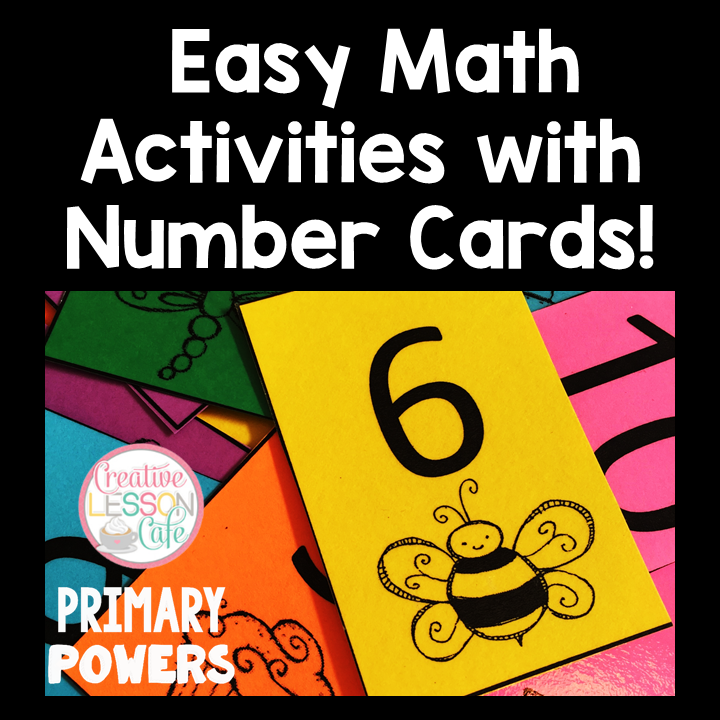
Card games are perfect for practicing math skills too.

This set includes a zero which is important in math.


In case you missed it, you can find the card set here.
 

You may be thinking that adding more games to your classroom will mean lots of extra work or spending some cash, but there are many games that can be played with things you already have like a deck of cards, index cards, or a Nerf ball. 

Here are some other easy suggestions from the book:
  • Toss a ball. The student that catches it must answer a review question.  They receive 1 point for catching the ball and two points for a correct response.
  • Create a vocabulary and definition game of memory on index cards. 
  • Play Charades and act out vocabulary words.
  • Play Pictionary and draw vocabulary concepts instead.
How can you work in time for games?

With so much to teach, it is easy to run out of time to work in a game. Consider scheduling a block of time on Fun Fridays for your game rotations. It is one way you can be sure that game time is a top priority!


Don't forget about the importance of games just for fun during inside recess time. They are great for learning how to be a good sport and how to work cooperatively. 

The top pick in my room is Mouse Trap!
 But... my students don't actually play the game, they just build the contraption and watch the steely marble go, just like I did when I was seven!!!


Field Trip Ideas for the Classroom

Do your students love the Magic School Bus videos? My class BEGS to watch them! We like to imagine how fun it would be if we could be in Miss Frizzle's class taking field trips like they do! The focus for this post is all about in-school and out-of-school exploration and the importance of providing children with opportunities for learning outside of the classroom walls. 


The author of Worksheets Don't Grow Dendrites begins one chapter by giving an example of special "field trips" she would take with her own child. I found myself smiling along with this intro. You see, during summer vacation, when my own child was growing up, not a day went by that I didn't plan some special outing or activity for us to do. EVERY DAY was a field trip!

I thank my lucky stars*** that I had the time and resources to give him those experiences. I am hopeful that these have helped to make him a well-rounded young man and prepare him for the REAL WORLD he is about to enter after graduation next year. 

Some days our outing was a simple thing like exploring nature at the local park. Other days, we went to a museum or activity center. How else would we ever get to pan for gold? Too bad we didn't get some genuine gold nuggets to pay for that college education! HA! 

Gold
It is so sad to think that there are many students who never have these opportunities for a variety of reasons. For those kiddos especially, the out of school field trip is VERY important! 

I love this excerpt from the book:

If students are to link their learning to prior knowledge, they must see the personal connection between what is being taught in the curriculum and their life experiences. (Lieberman & Miller, 2000) 


Let's aim to give students all the life experiences that we can in the year we have with them!


 Different Types of Field Trips

1. Obviously, planning an out of school trip around your curriculum or unit is one idea. Then the class has some shared experiences and background knowledge to build upon for the rest of the lessons.

On average, our second graders go on three field trips a year. It costs about ten dollars per student for each trip and that adds up! We try to plan some educational and CULTURAL outings. Some of our favorite out of school trips have been to science centers, the community library, the apple orchard, local farms, Sanders Chocolate Factory, a fun run at the middle school track, a historical museum and old-fashioned school house, cosmic bowling, the movie theater, local plays and the Henry Ford Museum.

Second Grade Field Trip Ideas

  So much fun!
There is something to be said for a field trip as a bonding experience for building relationships. That is learning too, right?


2. The Inside-School Field Trip: Another recommendation in the book is regularly taking your students out of the room to explore the school building (with a purpose). One example is to go on a scavenger hunt for shapes or to take photos for a project.

We go on a daily in-school field trip at the start of the year to practice our positive behavior in different settings like the library and lunchroom. 
We even cram 28 kiddos into the small classroom restroom to talk about the expectations and hygiene in there! 
That is considered a field trip! :)


3. Outdoor Field Trip: This one does not require a bus ride any place. This could be as easy as letting the students go outside to collect leaves, do a messy experiment, observe the clouds or something simple like that. Maybe there is a neat destination that is even within walking distance. How fun would that be? 

4. The Virtual Field Trip: Finding an amazing site to show your students is the next best thing to visiting. Unless we really have a Magic School Bus, some places will always be out of reach! 

When learning about the history of St. Patrick's Day, I show my class photos of what it looks like in Ireland with a virtual 360 tour!


image source

Here are two super sites for interactive video tours you might try out:

Smithsonian National Museum of Natural History

Polar Husky- The Iditarod 

You can also ask your school if they have equipment that supports Interactive Video Field Trips or Distance Learning!

  Set a Professional Goal!

 Most of us are pretty good at scheduling the fun out-of-school field trips, but how well do you work in the other types?
 I know I have room for improvement there.
 Maybe try planning an in-school hunt or outside activity soon!
:)

As always, feel free to leave your own thoughts about the importance of "field trips" in the comments below! 

The Science of Learning: Teaching Strategies that Work!

We already know that Worksheets Don't Grow Dendrites! So what best-practice strategies DO? I can't wait to find out and learn more! The new book I am so excited about arrived in my mailbox just yesterday. Today I'll highlight takeaways for a book study of Strategies 1 & 2 in Worksheets Don't Grow Dendrites (second edition) by Marcia Tate. 


We've seen many changes in the classroom over the years. No longer are students sitting quietly in their seats all day like we did when I was in school! The first section of this book is a good reminder that students need to be allowed to interact and talk with one another. I'm not talking about casual chit-chat like you might have during a snack break or something. This kind of talk needs to be intentional.

Strategy 1: Brainstorm and Discussion :

When students talk about a topic, they will understand it better because their brains not only mentally process the information, but also verbally process it. (Allen, 2008) 


It used to be a proud moment for a teacher when another adult would walk into the room and compliment the class with comments like... Oh, they are working SO quietly! While a talkative classroom can look like a chaotic one, the benefits for learning are great.


How are you doing with this one? Do you allow and encourage discussion among students? I have to be honest, I do like it quiet when I am testing or when the students need to be fully focused on a task like reading. So many students are easily distracted by noise, so there are times when I think quiet has a purpose for learning as well.

When my students do talk, my favorite strategy to use is the WBT strategy, Teach-OK. The students pair up to teach one another, in their own words, what was just taught with gestures. The students are not allowed to simply "parrot" what was said. They need to restate it and make it their own. When they teach each other, the listener gets to hear the information in yet another way. What they may miss the first time from the teacher they can learn from a peer! When the teacher randomly calls out TEACH the students tend to be more attentive because they never know when it is coming.


I once heard this phrase at a PD workshop...Talk and Chew. The teacher talks and then the students are given time to chew on the information for a while while sharing verbally. I think this is also a good fit for the point that the author makes about discussion.

We have partner discussions down pretty well because we do them regularly. My goal is to start doing more small group (family) discussions too by purposefully structuring activities where everyone can be engaged. There are always those students who lead (or monopolize) the conversation and some that are just listeners. Having some pre-group work mini-lessons is probably a good idea!

What I have been reminded of from this first part of the book, is that we should strive for the upper levels of Bloom's Taxonomy as often as possible.  I love this butterfly visual. I have a copy in my room! It's great to glance at during any kind of questioning or when choosing a follow-up activity.


Strategy 2: Drawing and Artwork

This one I love! You might have guessed from my blog name that I am all about creativity in the classroom. Being creative is more than just artwork of course. This strategy is about making meaning by allowing students to illustrate concepts.

When useful, teachers should encourage students to draw pictures that can help them gain more insight by representing abstract concepts graphically. (Posamentier & Jaye, 2006)


I feel like I'm on the right track with this strategy... although there is ALWAYS room for improvement! For example, when learning about Harriet Tubman in February, I asked the students to illustrate the major events in her life. While the drawings are a little person's representation of her life, they are their own mental images.


In the first picture, we see Harriet working as a slave child and winding balls of yarn. The next drawing shows Harriet and her marriage to John Tubman. It is not likely that Harriet wore a beautiful white dress and carried a bouquet on her wedding day, but this is their schema! Good stuff either way!

This is an example of illustrating new vocabulary. 
Creating a pictionary booklet is always fun!


 I mentioned above that one thing I try to do is to incorporate artwork into worksheets. Here are some examples for a variety of subjects! At first glance these may look like plain old worksheets but many of them ended up as a project, craft or something more. These photos show the beginning and planning stages! Just because an activity is on a piece of paper does not necessarily mean that it fits the definition of a worksheet. I do not think that this book is all about becoming paper-free classrooms. But with anything, we use printables in moderation! We all know that there is value in pencil paper tasks as long as the students are assessed with a pencil-paper test! 


My goal is to do more of these types of activities on a daily basis. At best, I am hit or miss with my planning. I have to remember that the drawing activity does not require a fancy page. 

Do you use foldables? Before interactive notebooks came along, I used to do lots of them with my students. Foldables are a great way to encourage artwork to solidify content. A true foldable that I'm talking about is not always the same as an interactive notebook page with flaps. With many popular interactive pages, you may often see a clipart image to be colored. In fact, I have made several sets like this and teachers and students enjoy them because they are CUTE! But coloring a picture is not the same as creating the image yourself, obviously! Many more thought processes are involved when we ask the students to add their own pictures. Because I am a bit of a perfectionist, I am guilty of wanting everything I display or send home to be neat and cute. Some students are often in a big hurry when they illustrate or only use all one color, which is hard for me to overlook! I will try harder. My goal is to get back to using genuine student-created foldables once again!

Want to learn more about foldables?
You can check out some ideas on my Pinterest Board. 


After reading the first part of the book, I am relieved to know that I am already on my way with implementing many of the recommended strategies. I have some goals to work on as well! 
I almost can't wait to go back on Monday so I can try something new!

I hope you were able to grow some of your own professional dendrites today and take away some good info and a little bit of inspiration! Until the next link-up for other strategies in the book, be mindful of how you incorporate discussion, drawing and artwork into your lessons!

We teachers love to try new things!
How do you incorporate these strategies into your lessons?
We'd LOVE to read about it in the comments below! 
:)

Related Posts Plugin for WordPress, Blogger...